Examining Volatility Metrics Guiding Bonus Allocation Choices Across Mobile Game Categories
Drew Schwarz · Sep 25, 2026

Examining Volatility Metrics Guiding Bonus Allocation Choices Across Mobile Game Categories
Volatility metrics serve as key indicators in mobile gaming ecosystems where developers and operators adjust bonus structures based on player behavior patterns and risk levels across different game types. These measurements track how frequently rewards appear and how large those rewards tend to be in categories ranging from casual puzzle titles to high-stakes reel-based experiences. Research from industry reports shows that studios use standard deviation calculations on win distributions to determine appropriate bonus sizing while maintaining player engagement over extended sessions.
Understanding Core Volatility Calculations in Mobile Environments
Developers calculate volatility through formulas that combine average return percentages with payout frequency data collected from millions of user interactions. A game with high volatility produces infrequent but substantial wins whereas low-volatility titles deliver smaller rewards at regular intervals. According to data compiled by the Entertainment Software Association those patterns directly influence how bonus pools get distributed among player segments in September 2026 updates to several major platforms. Operators examine historical session logs to refine these models and allocate promotional credits that match the underlying risk profile of each category.
Category-Specific Patterns in Puzzle and Casual Titles
Puzzle and match-three games typically register lower volatility scores because their mechanics reward consistent small progressions rather than rare jackpots. Bonus allocation in these segments often favors daily login incentives and level-completion multipliers that keep retention rates steady. Figures from platform analytics indicate that players in low-volatility categories respond better to frequent micro-bonuses which sustain longer playtimes without large swings in account balances. Those patterns allow studios to set aside smaller portions of their marketing budgets while achieving comparable engagement levels to higher-risk genres.
High-Volatility Reel and Action Categories Demand Different Approaches
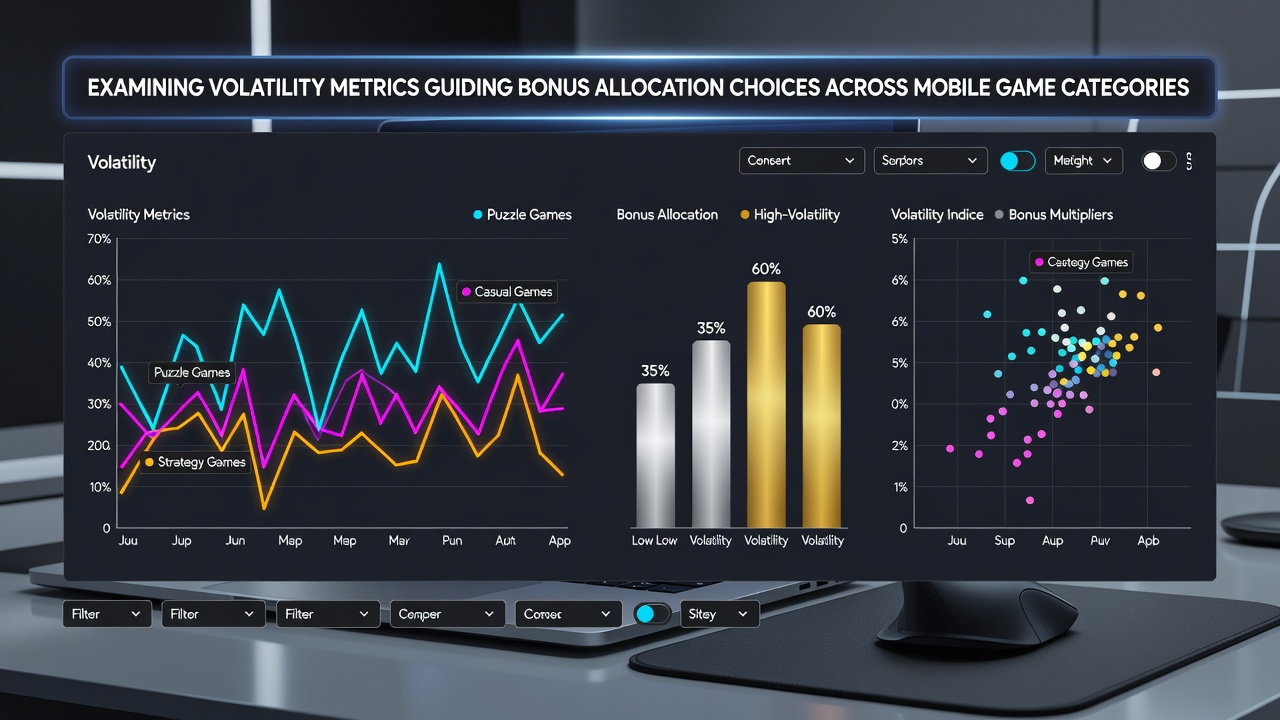
Reel-based and action-oriented mobile games show elevated volatility readings due to randomized outcome engines and progressive multiplier systems. Bonus strategies in these areas shift toward larger one-time offers and milestone rewards that compensate for longer dry spells between significant wins. Data indicates operators increase allocation percentages for free-spin bundles and deposit-match credits in these categories to offset the steeper variance players encounter. External studies from regulatory bodies in regions such as Australia reveal that such targeted distributions help stabilize player spend rates across extended campaigns.
Cross-Category Data Integration and Allocation Models
Platform operators combine volatility scores from multiple game types into unified dashboards that guide overall bonus budgets. Hybrid titles blending elements from casual and high-stakes genres require blended allocation formulas that account for shifting player preferences within single sessions. Reports compiled in September 2026 highlight how machine-learning models now process real-time volatility inputs to adjust bonus visibility and value on the fly. This approach reduces over-allocation in stable categories while ensuring sufficient incentives remain available for volatile segments where player churn risks rise faster.
Regulatory and Industry Data Shaping Current Practices
Government agencies in Canada and the European Union track aggregate volatility statistics to inform responsible gaming guidelines that affect bonus design. Those datasets show correlations between high-volatility exposure and accelerated deposit patterns which prompt operators to calibrate reward caps accordingly. Industry organizations publish quarterly summaries that developers reference when setting category-specific bonus tiers for the upcoming fiscal periods. The integration of these external benchmarks with internal telemetry creates allocation frameworks that remain responsive to both market conditions and compliance requirements.
Conclusion
Volatility metrics continue to shape bonus allocation strategies across mobile game categories by providing quantifiable links between game mechanics and player response curves. Operators refine these models through ongoing data collection while incorporating inputs from academic studies and regional regulators. The resulting systems balance promotional spend with engagement goals in environments where category differences drive distinct risk and reward dynamics.